
For adults · Life
Why Your Habits Live in Places, Not in You
The reason a habit holds in one context and vanishes in another isn't about resolve. It's about cues.
Selfey Editorial · 7 min read
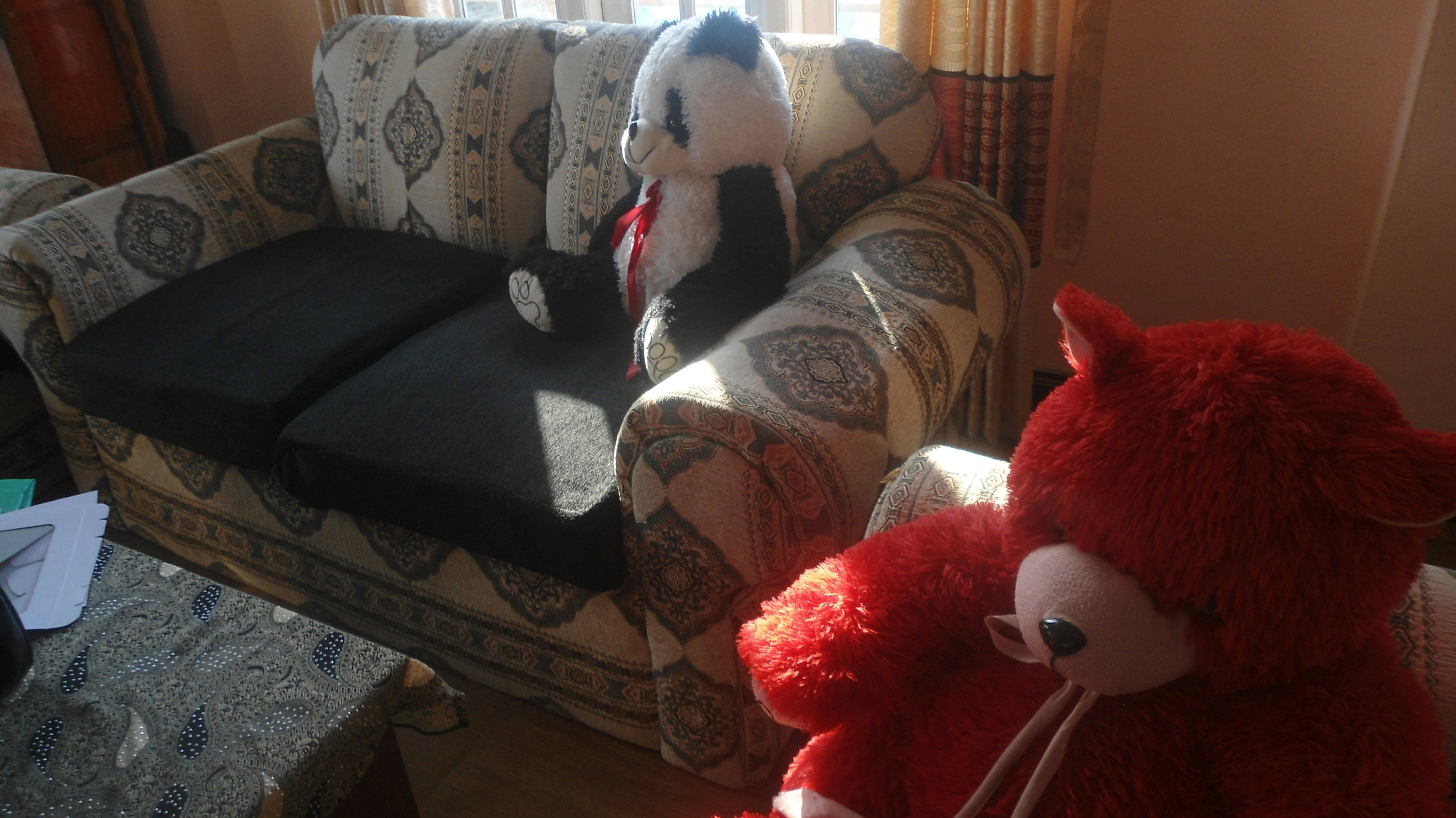
You wake up on the second morning in an unfamiliar flat, step into the kitchen barefoot, and reach your right hand out towards empty air where the coffee grinder usually sits. You freeze for three seconds, hand suspended in mid-air, while your nervous system slowly catches up with the fact that the kettle is three feet to the left and the mugs are inside a cupboard you have never seen before.
It is a disorienting, hollow sensation. Nothing in your mind had actively planned to make coffee; your body was simply carrying out a sequence it had performed thousands of times. In that suspended moment, you realise that the habit was never purely stored between your ears. It was stored in the angle of the morning light across your own kitchen counter, the distance between the sink and the stove, and the familiar tactile weight of the third drawer down.
There is a well-known landscaping phenomenon known as a 'desire path'. Urban planners pave a neat, right-angled walkway across a park, but pedestrians consistently cut across the grass on a diagonal, wearing a raw strip of brown earth into the lawn. The most sensible architects eventually give up fighting the walkers and pave over the dirt trail instead. Human behaviour works exactly like this: it follows the route of least resistance in any given landscape, regardless of what our conscious intentions planned on paper.
What automaticity actually asks for
When we talk about habits, we usually treat them as personal possessions, like a steady pulse or a good memory. We imagine that someone with a regular writing routine, a consistent exercise practice, or an effortless tendency to drink water carries a reservoir of private discipline inside them. We assume that if they were dropped onto a deserted island, they would unpack that same discipline seamlessly alongside their clothes.
Habit research generally describes habits as behaviours triggered automatically by a cue in the environment, rather than behaviours driven fresh each time by conscious decision. The cue can be a time of day, a location, a preceding action, or an emotional state — coffee at the same desk, a phone-check right after sitting down, or a snack the moment you walk into the kitchen.
The crucial element in that finding is consistent context. When you repeat an action in an environment that remains stable, your brain begins offloading the decision-making process to your surroundings. The physical layout of your desk, the particular mug on your coaster, and the sequence in which you set down your keys become external triggers that launch the behaviour before conscious deliberation even begins.
This explains something that trips a great many people up: a habit that felt solid and effortless can vanish completely after a house move, a new job, or even a rearranged living room. It is not that your discipline suddenly weakened or that your character degraded. The physical scaffolding that held the behaviour upright was simply dismantled, leaving the action exposed to the heavy friction of conscious willpower.
The myth of the portable discipline
Most of the self-reproach we experience around dropped habits comes from the mistaken belief that discipline ought to be portable. When someone transitions to working from home and finds themselves wandering into the kitchen every twenty minutes, they typically conclude that they are fundamentally unfocused when left to their own devices.
Yet an office is not merely a room with desks; it is a dense matrix of environmental cues. It contains ambient social expectations, specific visual boundaries between work and rest, dedicated furniture, and fixed commuting rituals that bookend the day. When you shift your laptop to the dining table, you are asking a brain that associates that table with family meals, evening clutter, and unpaid bills to suddenly inhabit the cognitive state of a focused professional.
Willpower in that setting is not failing because you lack resolve. It is failing because it is being asked to do the heavy lifting that spatial boundaries, sensory cues, and physical architecture were previously doing for free.
A habit that disappeared after a move was never truly yours to hold onto through willpower alone. It belonged, at least in part, to the room it happened in.
Reading your environment as a map of prompts
If you look closely at your home through this lens, you begin to see that every room is not just a container of furniture, but a map of silent prompts. A comfortable armchair positioned directly facing a television screen is not a neutral seating area; it is an active cue to pick up the remote control. A kitchen worktop covered in mail, half-eaten packets, and charging cables is an active cue for fragmentation.
Conversely, spaces that support calm, focus, or movement are rarely products of raw mental fortitude. They are spaces where the path of least physical resistance matches the person's real intentions. If your running shoes are tucked away at the back of a dark wardrobe behind winter coats, going for a jog requires half a dozen micro-decisions before you even tie your laces. If they sit directly beside your front door with your socks placed inside them, the physical cue does half the work.
The Context-Driven Habit Cycle
Stable Anchor: A fixed physical location or recurring sensory trigger
Frictionless Cue: The relevant object is immediately visible and unblocked
Automatic Script: The body begins the action before deliberation occurs
Contextual Resolution: The cue is naturally reset for the next cycle
This context-dependency also explains why breaking an unwanted habit is so exhausting if you remain in the exact setting where it was formed. Trying to stop mindless late-night snacking while sitting on the same sofa, at the same hour, under the same lighting is an uphill fight against thousands of reinforced neural associations. Changing the chair, the room, or the lighting often achieves what brute willpower cannot.
Designing cues instead of scolding your mind
If habits are cue-dependent rather than willpower-dependent, that means you can build a habit by engineering its cue rather than by trying to remember to do it. It also means a broken habit after a disruption isn't a personal failure — it's an entirely predictable consequence of a changed environment, and it can be rebuilt the same way it was built the first time.
The most sustainable approach is anchoring: attaching a desired action directly to a physical marker or an established sequence that already happens without effort. You do not decide to 'read more'; you decide that setting your morning teacup in the sink is the cue to open the book waiting beside the kettle. The sink and the counter become the physical home of the habit.
- Attach the new habit to an existing, stable cue (after I pour the coffee, after I sit at my desk, after I close my laptop)
- Keep the cue and the behaviour in the same physical location every time, at least at first
- Keep the tools required for the habit permanently visible and completely frictionless to access
- After any big life change — house move, new job, new baby — expect old habits to need rebuilding from scratch, and don't read that as backsliding
This reframing tends to remove a great deal of unnecessary self-blame. When you understand that human actions are deeply tethered to geography, you can stop treating dropped routines as character defects. The next time a habit evaporates after a move, a renovation, or a shift in working hours, you do not need to hunt for more resolve. You only need to look at the room you are standing in, find a steady corner, and begin laying down the cues again.
Sources + further reading
- How habits form — Harvard Health · Overview of habit loops and context-dependent automaticity.
General information, not medical advice. If something feels unmanageable, speak to a GP or a qualified professional.
Keep reading

For adults · Life
The Empty Half-Hour That Never Stays Empty
You finish something, and there's a gap in the evening. Within minutes it's full again — a chore, a scroll, a chat you didn't plan to have. What's actually happening in that reflex to refill it?

For adults · Rest
Maybe the Unit of Self-Care Needs to Shrink, Not the List
Not fewer commitments — smaller ones. A ninety-second version of a practice you've been skipping because the twenty-minute version never happens.
For adults · Rest
The Hour After Everyone Else Is Asleep
It's 11:40pm, the dishwasher is humming, and you are wide awake doing absolutely nothing productive on purpose. That's not a failure of discipline. It might be the only unclaimed hour you have.
Want to make this personal?