
For adults · Joy
Why a Weekend Away Feels Longer Than a Weekend at Home
Novelty doesn't just feel nice in the moment. It changes how much time feels like it happened.
Selfey Editorial · 5 min read
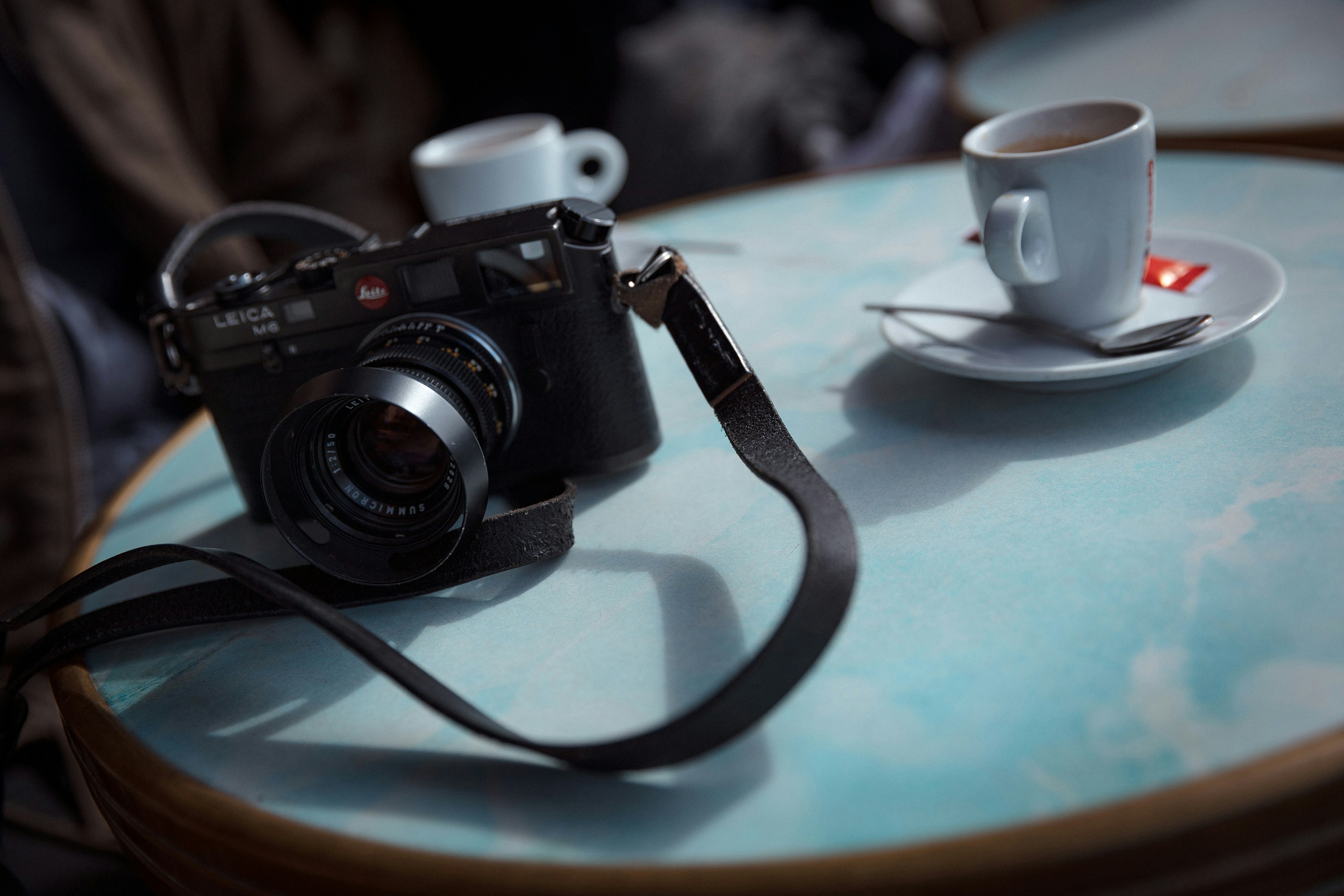
You unpack your weekend bag on Sunday evening, setting your toothbrush back in its ceramic holder, and Friday morning feels like a distant country. You have been gone for forty-eight hours, yet in your mind, the trip contains the texture, weight, and volume of an entire fortnight. By contrast, the previous weekend—spent at home doing laundry, answering a few lingering emails, and watching television from the sofa—vanished almost entirely between Saturday lunch and Sunday dusk.
Both weekends contained the exact same allocation of time: two rotations of the earth, twenty-eight hundred and eighty minutes, precisely forty-eight hours. Yet memory refuses to measure them equally. This disparity is not an illusion or a romantic exaggeration. It is a well-documented feature of human cognition, driven by how the brain encodes, catalogues, and reconstructs experience.
The architecture of retrospective time
To understand why unfamiliar environments stretch time, we have to look at the difference between prospective time (how time feels while we are inside it) and retrospective time (how long it feels when we look back upon it). When you are fully absorbed in navigating a new town, decoding a transit map, or choosing dinner in an unfamiliar language, the present moment often moves quickly. You are attentive, engaged, and mentally occupied.
The magic happens only after the experience has passed. When you sit down to remember those forty-eight hours away, your brain assesses the duration of the period not by looking at a clock, but by measuring the sheer volume of distinct memory files it recorded along the way.
In an unfamiliar place, your brain is forced off autopilot. It has to register the pattern of the cobblestones, the odd layout of the guesthouse bathroom, the smell of damp pine along the trail, and the rhythm of unfamiliar voices. Each sensory input is treated as new data worth filing away. When you look back, the mental timeline is crowded with rich, individual markers, giving the subjective impression of vast chronological space.
The Memory Density Spectrum
- Automated routine (fewest encoded markers)
- Familiar environment with minor variations
- Moderate cognitive engagement at home
- Unfamiliar setting with intentional noticing
- Immersive novel experience (maximum memory density)
How autopilot compresses our days
The opposite happens when you spend a weekend at home following familiar habits. Routine is one of the brain's most remarkable evolutionary achievements. By converting recurring actions into predictable scripts—making coffee, driving the same route, scrolling through familiar feeds—the brain conserves an immense amount of metabolic energy. It simply does not need to record every detail of the kitchen counter you have wiped a thousand times.
The consequence of this biological efficiency, however, is aggressive memory compression. Because Sunday looks, smells, and feels almost identical to the previous Sunday, the brain merges them into a single, generalised composite. When you look back on two days spent entirely on autopilot, there are few distinct bookmarks for the mind to count. The period collapses into a brief, shapeless blur.
This mechanism also helps explain the universal feeling that years accelerate as we age. Childhood feels endless because nearly everything is encountered for the first time; adulthood often feels like a steep downhill slide because our days become dominated by predictable, highly efficient routines that leave minimal new imprint on memory.
Time does not actually speed up as we grow older; our lives simply become easier for our brains to summarise.
The quiet power of curiosity
Novelty alone, however, is only half of the equation. You can walk through an entirely new city with your head down, worrying about a work deadline or staring at your phone, and return home with very little memory density to show for it. What truly expands time is curiosity: the active, interested orientation toward what is happening around you.
Curiosity transforms a passive visual scene into an active cognitive experience. When you wonder why an old building has a bricked-up window, or pause to ask a bookseller why a particular title is displayed on their counter, you are anchoring yourself in the present through deliberate attention. That attention acts as a high-resolution lens, ensuring that moments are recorded with emotional and sensory clarity rather than low-definition background noise.
Expanding time within an ordinary week
The most liberating implication of this science is that you do not need an airline ticket, an expensive hotel booking, or an elaborate itinerary to stretch your perception of time. You simply need to introduce small, deliberate deviations into the predictable patterns of your ordinary life.
When you disrupt an established habit, you temporarily force your brain out of its compression routine. Walking down a residential street you have never traversed before requires your visual cortex to scan the houses, the gardens, and the light. Reading an article on a topic you know nothing about forces new associative pathways. These micro-doses of novelty scatter distinct markers across your week, preventing an entire month from collapsing into an unremarkable haze.
- Take a different path on an errand you run frequently, deliberately looking at the architectural details of the buildings you pass.
- Ask a colleague or friend a genuinely unexpected question rather than relying on automatic conversational scripts.
- Cook a meal using an ingredient or technique you have never worked with before.
- Step outside at dusk without your phone and spend five minutes noticing the changing light and evening sounds.
The goal is not to fill every waking hour with relentless stimulation or frantic productivity. Rather, it is about giving your mind something textured to hold onto. By punctuating the smooth surface of routine with small moments of genuine observation, you subtly widen the perceived boundaries of your life.
Sources + further reading
- Why does time seem to speed up as we age? — Scientific American
- Curiosity and well-being — APA
General information, not medical advice. If something feels unmanageable, speak to a GP or a qualified professional.
Keep reading
For adults · Joy
What Do You Even Do for Fun Any More?
Someone asks, at a dinner or a check-up or a first date, and there's an actual pause before you answer. That pause is worth taking seriously.
For teens · Body
Moving Your Body Without Making It About How You Look
Movement can be for how it feels, not for what it does to the way you look. That shift changes almost everything.
For teens · Mind
You're Allowed to Change Your Mind About Who You Are
The version of you from a year ago liked different things, wanted different things, dressed differently. That's not inconsistency.
Want to make this personal?