
For parents & caregivers · Rest
What Is Your Child Getting From the Screen?
Before you fight the screen time, it helps to know what the screen is actually giving back.
Selfey Editorial · 8 min read
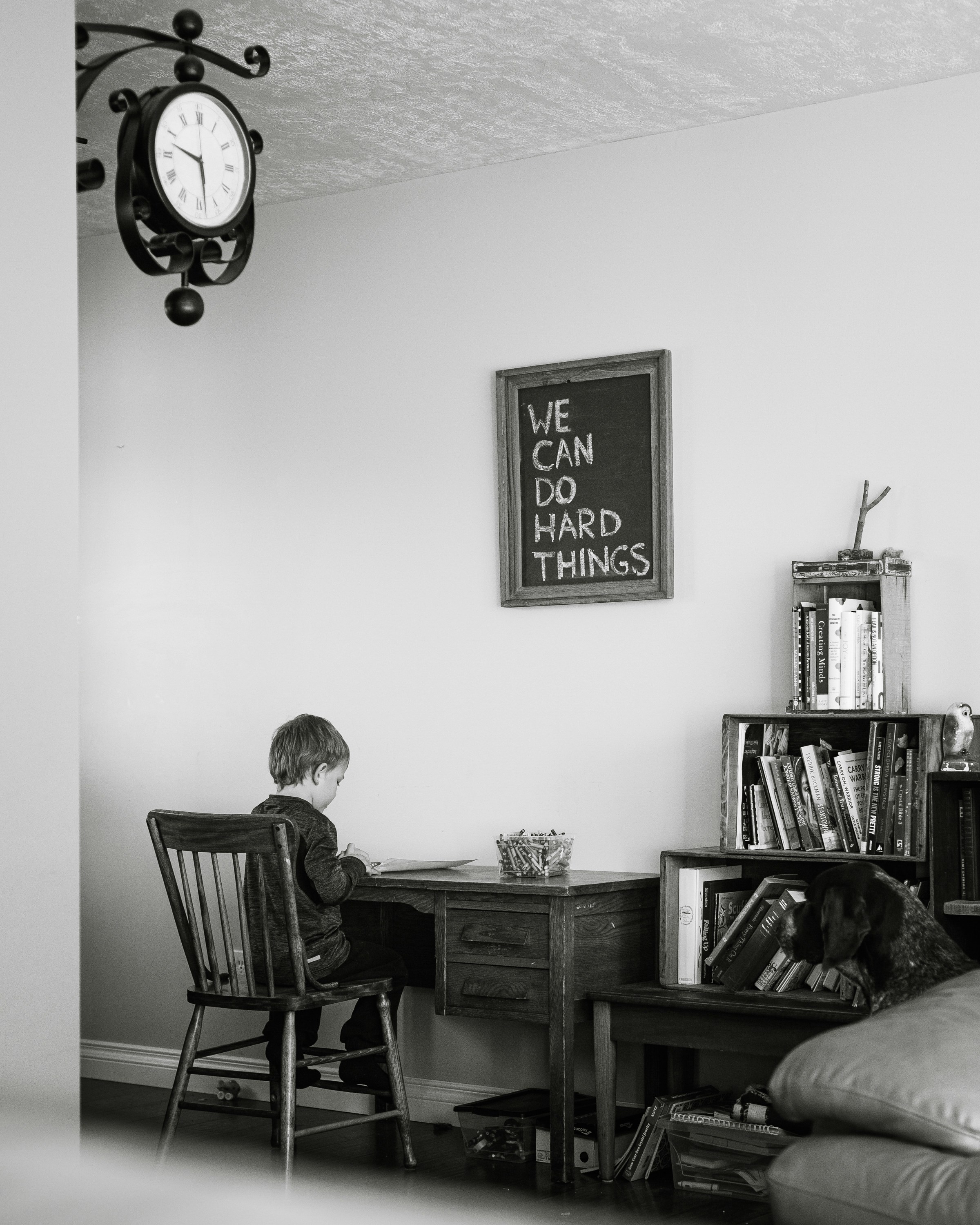
The school bag drops in a heap by the front door, one shoe stays half-kicked off in the hallway, and before the kettle has even boiled for tea, your child is curled tightly into the corner of the sofa. A tablet or phone is already lit in their hands, their eyes locked on the glass, their headphones firmly over their ears. When you gently call their name from three paces away to ask about their lunchbox or remind them about their coat, they do not merely ignore you; when pressed, they react with sudden, prickly intensity, as if you have just tried to snatch away their personal oxygen supply.
It is one of the most reliable and exhausting flashpoints of modern family life. In that moment of friction, it is extraordinarily easy to interpret their withdrawal as defiance, laziness, or proof of a creeping digital addiction. From across the room, all screen time looks deceptively identical: a hunched posture, a blank expression illuminated by blue light, and an impenetrable wall between the child and the household. Yet treating that screen as a single, uniform bad habit obscures the far more helpful question waiting beneath the surface: what specific emotional or physical state is that glowing rectangle providing your child right now?
A child watching twenty-second rapid-fire video clips, a child methodically constructing a multi-layered castle in a sandbox game, and a child quietly text-chatting with two schoolmates while completing a cooperative puzzle are engaged in three entirely separate neurological and emotional activities. They are drawing upon different cognitive reserves, regulating their nervous systems in distinct ways, and attempting to solve different internal dilemmas. Until you know what the device is supplying, setting an arbitrary timer rarely produces anything other than resentment and renewed resistance.
The hidden functions of the screen
For many children, particularly in the late afternoon, the primary pull of a screen is that it is the only space in their waking day where zero demands are being placed upon them. At school, they are directed constantly: where to sit, when to speak, how to line up, how to resolve disputes, and what to produce under time pressure. Their cognitive and social executive function is running at peak capacity for six straight hours. When they collapse in front of a familiar animated series or a simple game, they are receiving an unearned, effortless reprieve. No one is assessing them, nobody requires an answer, and their depleted system can temporarily coast on low demand.
In other instances, what the screen offers is pure, reliable predictability. Childhood is largely an exercise in having very little agency over your environment, your schedule, or the moods of the adults around you. A favourite creator whose cadence never changes, a video game level whose physics are mathematically stable, or a comfort show watched for the twelfth time gives a child total sovereignty. They know precisely what will happen next, which allows a hyper-vigilant or overwhelmed nervous system to drop its guard in a way that the unpredictability of a noisy, busy household does not allow.
Alternatively, a child may be turning to a screen because their internal state is flat, under-stimulated, or bored. Fast-paced visuals, rising musical cues, and immediate reward loops provide a direct, accessible burst of dopamine and sensory stimulation that their physical environment has failed to generate on a quiet, grey afternoon. In this mode, the device is not functioning as a sedative or an anaesthetic; it is acting as a deliberate stimulant, re-engaging an under-aroused brain that does not yet possess the internal scaffolding to organise its own complex independent play.
We also frequently misjudge the social nature of digital spaces. What looks from the outside like an isolated child sitting silently in a dark bedroom is often a rich, low-friction social habitat. Parallel play—the developmental stage where young children play side by side without directly interacting—extends well into adolescence in digital forms. Playing an online game while connected on audio allows children to inhabit a shared social world without the intense, often exhausting pressures of eye contact, body language interpretation, and physical self-consciousness that can make in-person interactions taxing after a hard day.
Finally, screens serve as an effective, immediate buffer against uncomfortable inner realities. If a child felt isolated on the playground, struggled with a maths assessment, or sensed tension between the adults in their home, an absorbing digital world offers a safe container away from those heavy sensations. Occasional emotional distraction is a normal, adaptive human coping mechanism that adults use every day. It only becomes a cause for deeper support when it becomes the sole coping mechanism in a child's repertoire, entirely displacing their capacity to feel, name, and process their real-world difficulties.
The question is rarely just how many minutes have passed. It is what underlying need the screen is standing in for.
Transition friction and why endings feel so sharp
Much of the distress surrounding screen time does not occur during the use itself, but at the moment of transition. Parents often observe that their child was calm and content five seconds before the boundary was called, only to disintegrate into tears, shouting, or sullen hostility the moment the power button is pressed. This sharp emotional cliff is rarely an act of calculated manipulation; it is a predictable physiological response to a sudden neurochemical drop.
When a child is engaged with an interactive screen, their brain is bathed in a steady stream of engaging stimulation and predictable reward. Pulling them instantly into the physical world—where they must immediately confront their own biological fatigue, physical hunger, school worries, and household chores—feels like an abrasive, sensory shock. Expecting a child to pivot seamlessly from an immersive, high-reward digital space to setting the dining table without a period of decompression is setting both parent and child up for conflict.
The Functional Spectrum of Screen Engagement
- Passive Decompression: familiar comfort shows, soothing ambient videos
- Emotional Buffering: escapism from social stress or school fatigue
- Social Parallel Play: co-gaming, voice channels, shared virtual spaces
- Arousal Regulation: fast pacing and immediate feedback loops for under-stimulation
- Active Sandbox Agency: world-building, digital illustration, coding, problem-solving
What to observe before setting boundaries
Before you rewrite family rules or implement restrictive software locks, it helps to spend three or four days acting as a quiet, non-judgemental observer of your child's digital habits. Step back from the sheer volume of time and look closely at the emotional ecosystem surrounding their device. You are looking for patterns in what draws them in, how they behave while engaged, and what state they return to once the screen is gone.
- The entry point: Are they picking up the device out of exhaustion, loneliness, boredom, or a specific creative drive?
- The cognitive state: Is their use passive and vacant, or active, social, and imaginative?
- The aftermath: Do they emerge from the session looking grounded and replenished, or hollowed out, irritable, and disconnected?
- The displacement balance: Is the screen regularly eating into adequate sleep, physical movement, basic hygiene, or offline friendships?
- The regulation threshold: Can they transition away with manageable frustration, or does every ending trigger prolonged, uncontrollable dysregulation?
When you view these patterns clearly, your conversations with your child can shift from adversarial policing to collaborative care. A child who is using a screen to decompress from an overstimulating school environment does not need a lecture on screen limits; they need a quiet, low-demand physical buffer when they walk through the door. A child who is using a screen because they are lonely needs gentle support building offline social bridges. The screen is almost always a messenger about an unmet developmental or physical need.
Building compassionate and durable boundaries
Recognising the genuine benefits a screen provides does not mean surrendering all family structure or allowing digital media to run unchecked. Children actually feel safer and more settled when they have firm, predictable, and benevolent boundaries around technology. However, a limit that is communicated with curiosity and respect lands entirely differently than a limit handed down out of irritation or moral panic.
When you establish clear boundaries—such as no screens during family meals, keeping bedrooms screen-free overnight to protect deep sleep, or agreeing on specific windows for gaming—frame these rules not as punishments or deprivations, but as protective structures that safeguard their body, their rest, and their relationships. When children understand that you are not trying to destroy their source of joy or relief, but rather protecting the rest of their living ecosystem, their willingness to cooperate increases significantly.
From the research
Sources + further reading
- Media and Young Minds — American Academy of Pediatrics
- Screen time guidance for children and young people — NHS
General information, not medical advice. If something feels unmanageable, speak to a GP or a qualified professional.
Keep reading

For parents & caregivers · Life
Helping Kids Come Off Screens Without a Fight
It's rarely defiance. It's usually a transition your child's brain hasn't had time to make yet.
For parents & caregivers · Rest
Helping a Child Decompress After School
The meltdown at 4pm is often not about anything that happened at 4pm. A caregiver's guide to what's really going on, and what helps.

For kids · Rest
Why Kids Sometimes Fall Apart After School
Holding it together all day takes real work. It makes sense that something has to give once you're home.
Want to make this personal?