
For teens · Rest
When Nighttime Is the Only Time That Feels Like Yours
You know you should go to sleep. You stay up anyway, because it's the only stretch of the day nobody's asking anything of you.
Selfey Editorial · 7 min read
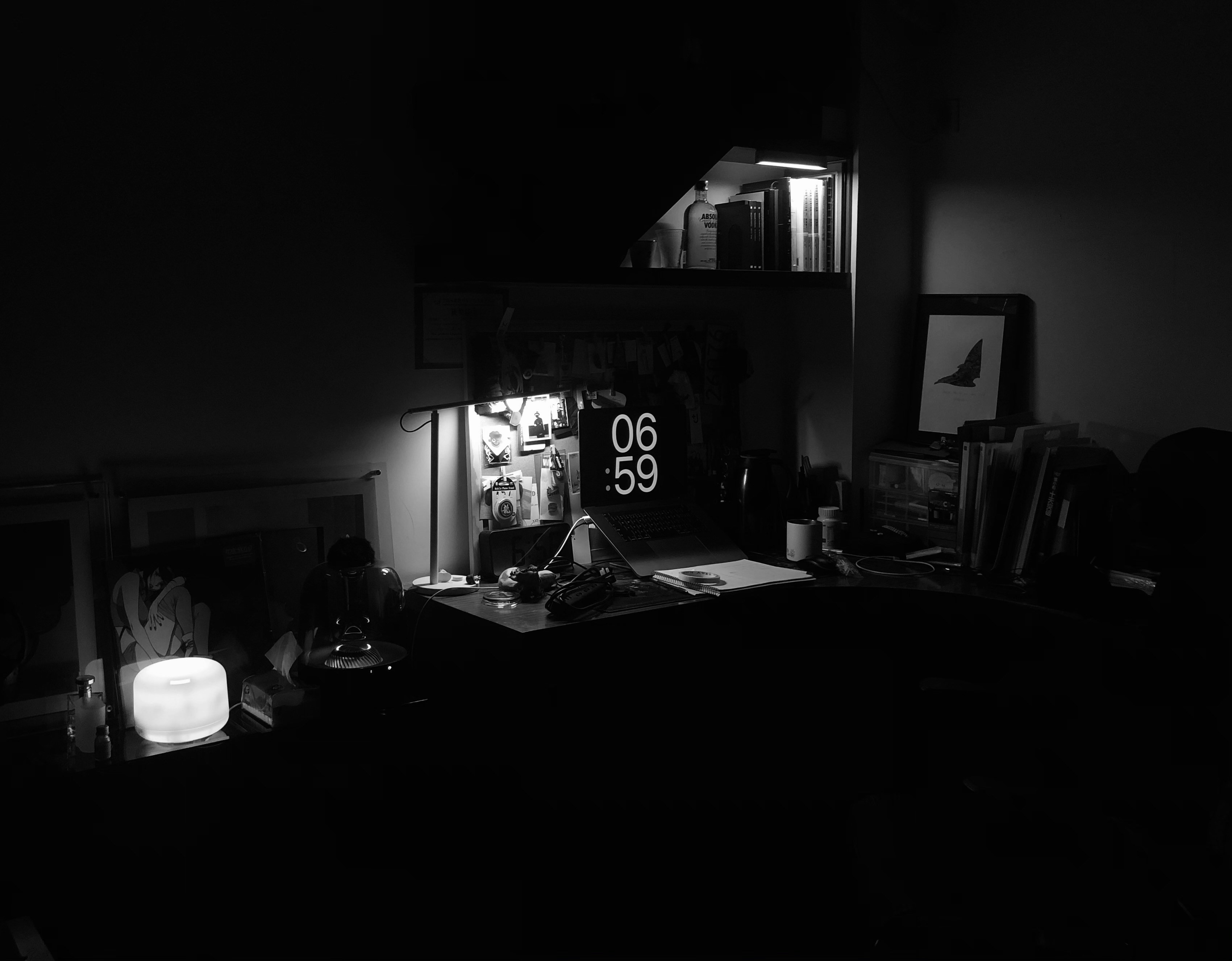
The house is completely dark, and the only light in your room is the cool blue glow of a screen against your bedsheets. You have set an alarm for six forty-five tomorrow morning. You have already calculated the exact hours of sleep you will get if you put your phone face down right now: six hours and twelve minutes. If you watch one more video, it drops to five hours and forty minutes. You know tomorrow will be loud, rushed, and heavy. Yet your thumb keeps moving, flicking to the next clip, the next thread, the next empty loop.
You are not staying up because you are full of energy. In fact, your eyes burn and your chest feels heavy with exhaustion. But some quiet, stubborn part of you refuses to close your eyes. Going to sleep feels less like rest and more like surrendering to the clock. Closing your eyes means the next thing you experience is the alarm, the rush out the door, and another whole day of people demanding your attention, your performance, and your effort.
This pattern has picked up a name online: revenge bedtime procrastination. It is not a clinical diagnosis, but it describes a very specific reality. You delay sleep not out of ignorance or carelessness, but as a silent protest. It is the only stretch in a twenty-four-hour cycle where nobody expects anything of you. No teachers, no coaches, no parents, no group chats demanding a reply. Just you, existing in the quiet.
The difference between scheduled breaks and unclaimed time
Think through an average Tuesday. From the second you wake up, your time belongs to someone else's schedule. School dictates when you sit, when you speak, when you eat, and when you move. After school, there might be sports, chores, part-time work, family dinners, or homework. Even when someone says, 'take a break,' that break often has boundaries. It is time granted to you by an adult or an institution, usually with the quiet expectation that you will return to being productive as soon as the timer ends.
Scheduled downtime is not the same as unclaimed time. Unclaimed time is space where you have nothing to prove, nowhere to be, and no standard to meet. It is the feeling of zero surveillance. For many teenagers, the only time that fits that description happens between eleven at night and two in the morning, when the rest of the world has finally gone to sleep and stopped asking questions.
When you look at it that way, staying up late is not an act of self-sabotage. It is an attempt at self-preservation. You are trying to reclaim autonomy that was squeezed out of the previous fourteen hours. The problem is not that you want personal freedom; it is that the night is the only place you have found room to keep it.
This biological delay means you naturally feel wide awake precisely when the daytime pressure lifts. Your brain is firing on all cylinders just as the house goes quiet. When your biological clock and your psychological need for freedom align at midnight, going to bed at ten thirty can feel impossible, even unnatural.
Why taking away the screen rarely solves it
When adults see you staying up late, they usually blame your phone. The common advice is simple: put the device in another room, turn off the internet, or download an app blocker. And while screens certainly make it easier to stay awake for another two hours without noticing, the screen is rarely the root cause. It is simply the easiest vehicle for unclaimed time.
If someone confiscates your phone, the underlying urge to protect your time does not disappear. You might find yourself reorganising a drawer, reading three chapters of a book you do not even like, sketching, or just staring at the ceiling for an hour. You are resisting sleep because turning off the light means turning on tomorrow.
Treating this as a phone addiction or a lack of discipline misses the point. When you frame it as a character flaw, you end up feeling guilty on top of being exhausted. The guilt makes the night even more fraught, which makes you want to escape into more scrolling. It becomes an endless feedback loop.
You are not staying up because you do not value sleep. You are staying up because it is the only hour nobody else has claimed yet.
The Cycle of Nighttime Autonomy
Full day of external demands and structured expectations
Zero unclaimed personal time during waking daylight hours
Late evening arrives as the only unsupervised, quiet space
Sleep is delayed to preserve a sense of personal freedom
Next day starts with heavy physical and cognitive fatigue
Being honest about the trade-off
Understanding why you stay up late does not eliminate the physical cost. When you trade sleep for quiet time, you are borrowing energy from tomorrow at an extraordinarily high interest rate. Chronic sleep loss among teenagers is linked to reduced concentration, sudden mood dips, heightened anxiety, and a feeling that everyday tasks require double the effort.
When tomorrow arrives and you are operating on five hours of sleep, your capacity to handle basic frustrations shrinks. School feels more tedious, small comments from friends or parents feel more irritating, and your brain works harder just to keep up. That increased friction makes tomorrow even more draining, which means by tomorrow night, you will feel an even stronger urge to stay up late and hide from the world.
The goal is not to shame yourself into sleeping. It is to look at the trade clearly. You are trading tomorrow's mood, focus, and energy for two hours of low-quality freedom in the dark. Sometimes, you might still decide that trade is worth it. But acknowledging the transaction gives you back control over the decision, rather than letting the clock slide away on autopilot.
Finding room earlier in the day
Because the root of the problem sits in your waking hours, the fix also belongs in your waking hours. You cannot fix a daytime deficit solely at bedtime. If you want midnight to stop carrying the weight of your entire personal freedom, you have to carve out small pockets of genuine, unclaimed space before the sun goes down.
This does not mean adding a two-hour hobby block to an already packed schedule. It means claiming tiny pockets of time where you are entirely off the hook. It could be fifteen minutes sitting on the back steps after school before opening a single textbook. It could be a walk around the block with headphones where you do not check notifications, or ten minutes lying on your rug listening to one album side.
The critical element is intention: this is time you chose, not time left over after everything else got finished. When your brain registers that you had some say in your day, the desperate hunger to steal time from the night begins to ease.
- Notice the difference between being wide awake and simply resisting the transition to tomorrow.
- Carve out small pockets of non-negotiable personal time during daylight hours, even if it is only ten minutes.
- Treat late-night scrolling as an indicator of daytime overload rather than a lack of willpower.
- Pair screen boundaries with intentional daytime autonomy instead of relying on pure discipline.
From the research
Teenage Sleep Patterns Actually Shift Later
Teenagers' internal body clocks naturally shift later, which is a real biological change, not just poor sleep habits.
Journal of Adolescence · 2015How Much Sleep Adults Actually Need, According to a Multi-Society Consensus
A consensus of major sleep and medical societies recommends adults get at least seven hours of sleep a night for optimal health.
Sleep · 2015
Sources + further reading
- Adolescent sleep and circadian rhythm — American Academy of Sleep Medicine
- Sleep duration recommendations for teenagers — American Academy of Pediatrics
General information, not medical advice. If something feels unmanageable, speak to a GP or a qualified professional.
Keep reading
For teens · Rest
Why Teenagers' Clocks Run Later (and What Actually Helps)
It's not defiance and it's not just phones. Adolescence genuinely shifts the body's internal clock later — here's what that means for you.

For adults · Rest
Why Scrolling Doesn't Refill the Tank
It's the thing everyone reaches for when they're depleted, and the thing that so often leaves them more depleted. Here's what's actually going on.

For teens · Rest
You Don't Have to Earn Rest
You don't need to finish everything first. That's not how tired works.
Want to make this personal?