
For adults · Body
The Walk That Isn't About Steps
Not every walk needs a purpose you can measure. Some of the most useful ones are the ones you take specifically to stop counting.
Selfey Editorial · 6 min read
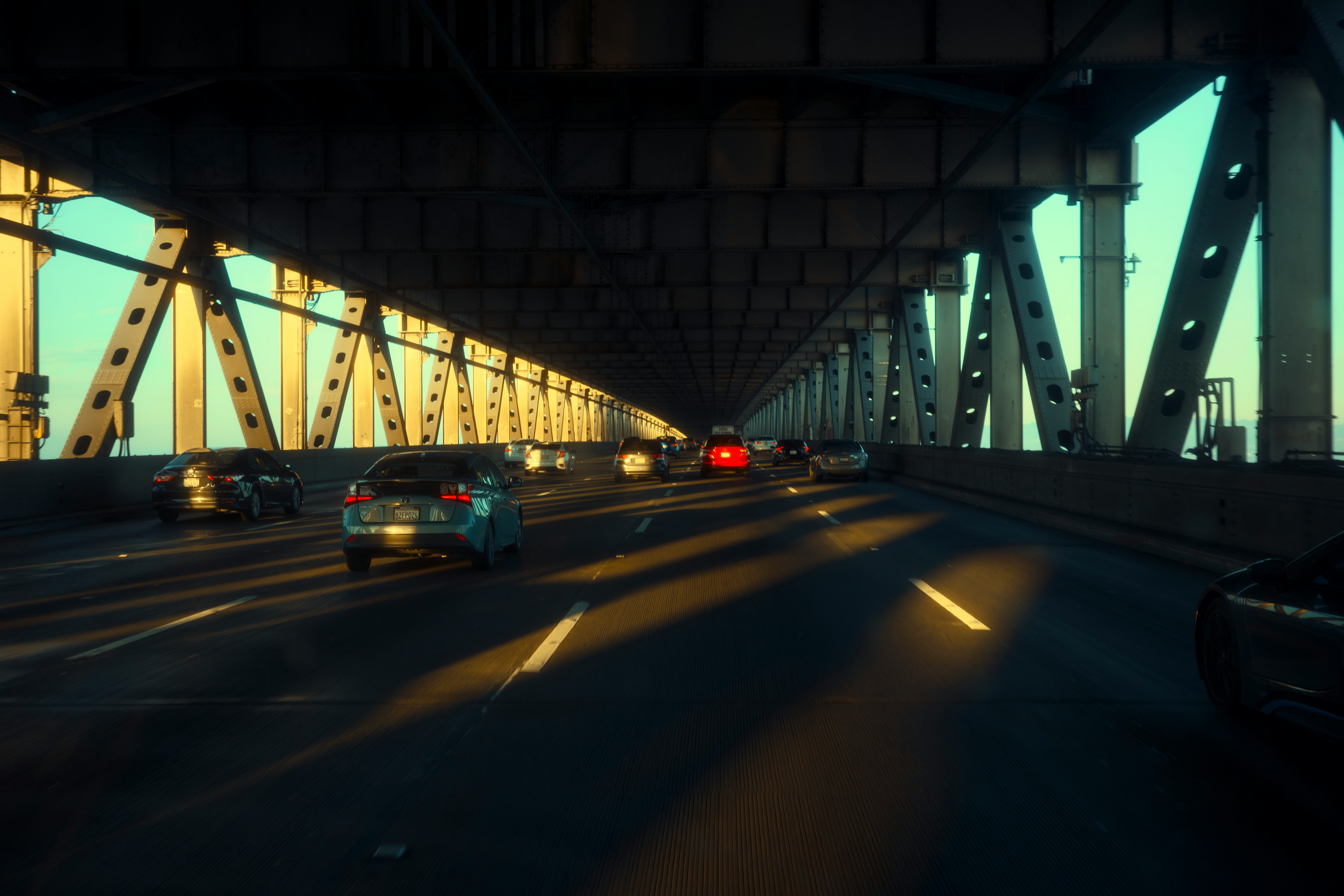
You pull the front door shut behind you, and for the first few yards down the pavement, your wrist twitches with habit. It is an almost subconscious reflex: the urge to tap a glass screen, select an outdoor walk, wait for the green light of GPS calibration, and confirm that your movement is being officially registered somewhere in the digital ether. Without that confirmation, there is a quiet, irrational whisper that the next twenty minutes will somehow not count.
There is a walk you take because a screen told you that you are four thousand steps short of an arbitrary daily target, and there is a fundamentally different walk—one you take because something inside your chest feels cramped, because the light through the window looked briefly inviting, or simply because you need to exist in the world without being observed or measured. Both involve putting one foot in front of the other. Beyond that physical mechanic, they are entirely different activities answering entirely different human needs.
The first kind of walk commands nearly all modern attention. It fits neatly into fitness trackers, corporate wellbeing challenges, and calendar slots. It can be quantified, logged, and celebrated as an accomplishment of discipline. The second kind is far older, considerably quieter, and, for a nervous system worn thin by perpetual output, often far more restorative.
The quiet cost of measuring everything
When an activity carries a target, your attention naturally aligns itself with the goal. A step-count walk has an implicit job to finish: a distance to cover, a heart-rate zone to maintain, or a circular progress ring to close before midnight. Because the objective is numerical, your brain stays tethered to the same executive, goal-oriented circuitry you use at your desk. You monitor pace, calculate remaining time, and evaluate whether your route is efficient enough to meet the quota.
A walk without a target has nowhere it needs to arrive. Because there is no finish line, your cognitive control network can gradually loosen its grip. This loosening is precisely what allows your attention to drift outward toward immediate sensory realities: the damp smell of fallen leaves, the peculiar brickwork of a neighbour's chimney, the chill on the back of your hands, or a half-formed thought you simply did not have the internal bandwidth to notice while staring at a spreadsheet.
This form of walking is notoriously difficult to schedule, which explains why it so rarely happens by design. When we block out twenty minutes in a busy day labelled 'walk', we almost inevitably approach it as another item on the to-do list—something to be executed promptly and crossed off. In doing so, we quietly reintroduce the very performance anxiety and metric-driven mindset the walk was supposed to relieve.
The awkward first ten minutes
The most challenging part of an aimless walk is almost always the beginning. When you step out without a podcast in your ears, an errand to run, or a digital tracker ticking away, the silence can feel surprisingly loud and prickly. For the first five to ten minutes, your mind will likely throw up a flurry of domestic anxieties, unfinished emails, and restless impulses to check your pocket.
This discomfort is not a sign that the walk is failing; it is simply the friction of deceleration. Your mental engine has been running at high revolutions all day, and taking away its immediate fuel produces a brief period of internal turbulence. Many people mistake this initial restlessness for boredom and immediately pull out their phones, truncating the decompression process just before it genuinely starts.
If you can tolerate that initial awkwardness without reaching for a distraction, the mental chatter tends to exhaust itself. The frantic drafting of mental lists begins to slow down, not because you forced yourself to relax, but because there is nothing in the immediate environment demanding a response. The mind eventually runs out of urgent rehearsals and settles into the rhythm of your stride.
Sometimes the most useful thing a walk can do is have no destination worth checking your phone for.
The Spectrum of Walking Intentions
- Tracked Fitness: Cadence, heart rate, and step quotas
- Utility Walking: Commuting or running essential errands
- Passive Decompression: Strolling with background audio
- Aimless Wandering: Sensory engagement without metrics
Choosing the walk you actually need
Neither style of walking is inherently superior. A brisk, metric-driven power walk with an energetic playlist can be deeply satisfying when you are carrying physical restlessness or pent-up frustration. It provides a clean, physical channel to discharge excess adrenaline and leaves you with the pleasant fatigue of measurable effort.
The difficulty arises when we rely on tracked, high-stimulus walks to solve cognitive overwhelm or emotional depletion. If your nervous system is already overstimulated, adding auditory input and performance tracking to your movement only compounds the sensory load. What you need in those moments is not another target to hit, but a temporary suspension of expectations.
- If you feel physically wired, sluggish, or irritable, a tracked walk with a brisk pace and music can help burn off nervous energy.
- If you feel mentally foggy, overstimulated, or emotionally drained, an unstructured walk with no audio input allows your thoughts to settle naturally.
- Noticing a sudden urge to check your phone or watch mid-stride is often a reliable cue that your brain is attempting to escape the unfamiliar quiet.
- Disappointment after a walk rarely comes from the route itself, but from expecting an exercise routine to provide the deep mental space of an aimless wander.
The practical friction of leaving the phone behind
Advocating for a phone-free walk is not a moralistic stance against technology. It is a matter of basic cognitive ecology. A handheld device keeps you tethered to social obligations, global news, and transactional communication. Even if you do not actively receive a message, holding the device preserves a state of continuous partial readiness—a subtle vigilance that prevents your attention from resting fully in your physical surroundings.
Leaving the phone on a hallway table, or at least buried deeply inside a zipped pocket on 'Do Not Disturb', creates a physical boundary that protects your wandering thoughts. It gives you permission to be temporarily unreachable, which is increasingly one of the rarest and most restorative conditions available to modern adults.
When you walk without the possibility of external interruption, the world around you takes on a different texture. You begin to notice the subtle gradations of evening light, the architecture of ordinary streets, and the rhythmic sound of your own breathing. These small, undemanding observations do not demand an analytical response; they simply ground you in the immediate present, offering a gentle counterweight to a life lived largely in abstract concepts and digital interfaces.
Keep reading

For adults · Body
Eating Well When You Have No Energy to Cook
There's a version of nourishment that doesn't require a recipe, a plan, or the will to stand at a stove. This is about that version.
For teens · Mind
Headphones, Hoodies and Other Ways We Make Space
The hood up, the headphones in, the sunglasses inside — these aren't avoidance. They're how you keep the world at a workable distance.
For adults · Mind
Why Sunday Night Feels Different From Every Other Night
Nothing has happened yet. That's exactly the problem — Sunday evening's particular dread isn't about anything real yet, which makes it strangely hard to argue with.
Want to make this personal?