
For kids · Connection
Sometimes You Need Space. Sometimes You Need Someone Close.
Both are normal. The trick is figuring out which one you actually need right now.
Selfey Editorial · 6 min read

The front door clicks shut, a school bag drops onto the hallway floor with a heavy thud, and shoes are kicked off into a corner. In that first ten minutes after arriving home, there is usually a subtle shift in the air. One child walks straight past the kitchen, heads into their bedroom, and pulls the door almost entirely closed. Another lingers near the kettle, leaning heavily against the kitchen counter, fiddling with a drawer handle and saying nothing at all.
Both of these reactions are responses to the same thing: a day spent out in the busy, noisy world. Yet they look entirely different from the outside. Sometimes, after hours of noise and instruction, all your nervous system wants is absolute quiet and an empty room. Other times, the very thought of being left on your own feels heavy and uncomfortable, and you want nothing more than to sit beside someone who knows you well, without even having to explain why.
Neither reaction is wrong, and neither one is a problem that needs fixing. They are simply two distinct ways the body asks to recover. The challenge—both for children learning to notice their internal states and for the adults caring for them—is figuring out which kind of tired is calling the shots on any given afternoon.
Two different ways a day takes it out of you
To understand why we flip between wanting solitude and wanting company, it helps to look at what school and modern days demand of us. From morning to mid-afternoon, a young person's brain is constantly processing input. There are fluorescent lights, scraping chairs, the chatter of thirty classmates, unexpected timetable changes, and the continuous social effort of sharing space, reading social cues, and answering questions.
When a day has been loud, demanding, or socially intense, your nervous system can become saturated with what we might call 'sensory and social full-ness'. Every extra sound feels sharp. A simple question like 'what did you have for lunch?' can land like an impossible demand. When you are full in this way, space acts like a cool compress. Solitude removes the need to perform, to respond, or to track what anyone else is doing, giving the nervous system room to settle back down to baseline.
There is, however, an entirely different kind of fatigue. Some days leave you feeling depleted, unsettled, or emotionally frayed. Maybe a friendship felt precarious at break time, maybe a task was frustrating, or maybe the world simply felt overwhelming and unpredictable. On those days, solitude does not feel restful; it feels isolating. The silence in an empty bedroom can amplify worry rather than quieten it.
When you are running on empty in this way, your nervous system is not asking for quiet—it is asking for safety. And for human beings, safety is fundamentally social. It comes from the physical presence of a calm, trusted person whose proximity signals that the day is over, the pressure is off, and you are protected.
Reading the signals in your body
Because both states are forms of tiredness, they often get muddled up. You might think you want to be left alone, only to find yourself feeling irritable and restless in your room five minutes later. Or you might seek out company, only to snap at the first person who speaks to you because their voice feels too loud. Learning to tell them apart is a gradual process of noticing physical cues.
The need for space usually announces itself through sensory sensitivity. Your skin might feel sensitive to touch, your jaw or shoulders might be clenched, and the idea of someone looking directly at you feels uncomfortable. You might feel an urge to make yourself small, turn down the lights, pull up a blanket, or put on headphones just to block out ambient sound.
The need for closeness feels different. It tends to show up as a hovering behaviour—drifting into the kitchen, sitting on the rug near the sofa, or making small, indirect bids for attention. You might feel a gentle ache in your chest, a lump in your throat, or a sudden burst of clinginess. You may not actually want to talk about your day, but you want the warmth of another person nearby.
- If being asked one more question makes you want to groan or cover your ears, you probably need space.
- If you find yourself following someone from room to room without really knowing what to say, you probably need closeness.
- If your room suddenly feels too quiet, heavy, or boring after five minutes, you may have needed connection rather than solitude.
- If you cannot tell, try ten minutes of low-demand quiet first. If your mood drops instead of settles, move toward company.
The Spectrum of Connection and Space
- Quiet Solitude (alone in a low-stimulus room)
- Sensory Rest (alone with comforting music or a book)
- Low-Demand Presence (parallel play; sitting together in silence)
- Gentle Proximity (a brief hug, sitting side by side)
- Active Connection (talking, sharing a meal, engaged play)
The middle ground: being alone together
We often speak about solitude and connection as though they are opposites, like a light switch that is either on or off. But there is a large, comfortable middle ground that often works better than either extreme: what developmental specialists call parallel presence or 'low-demand proximity'.
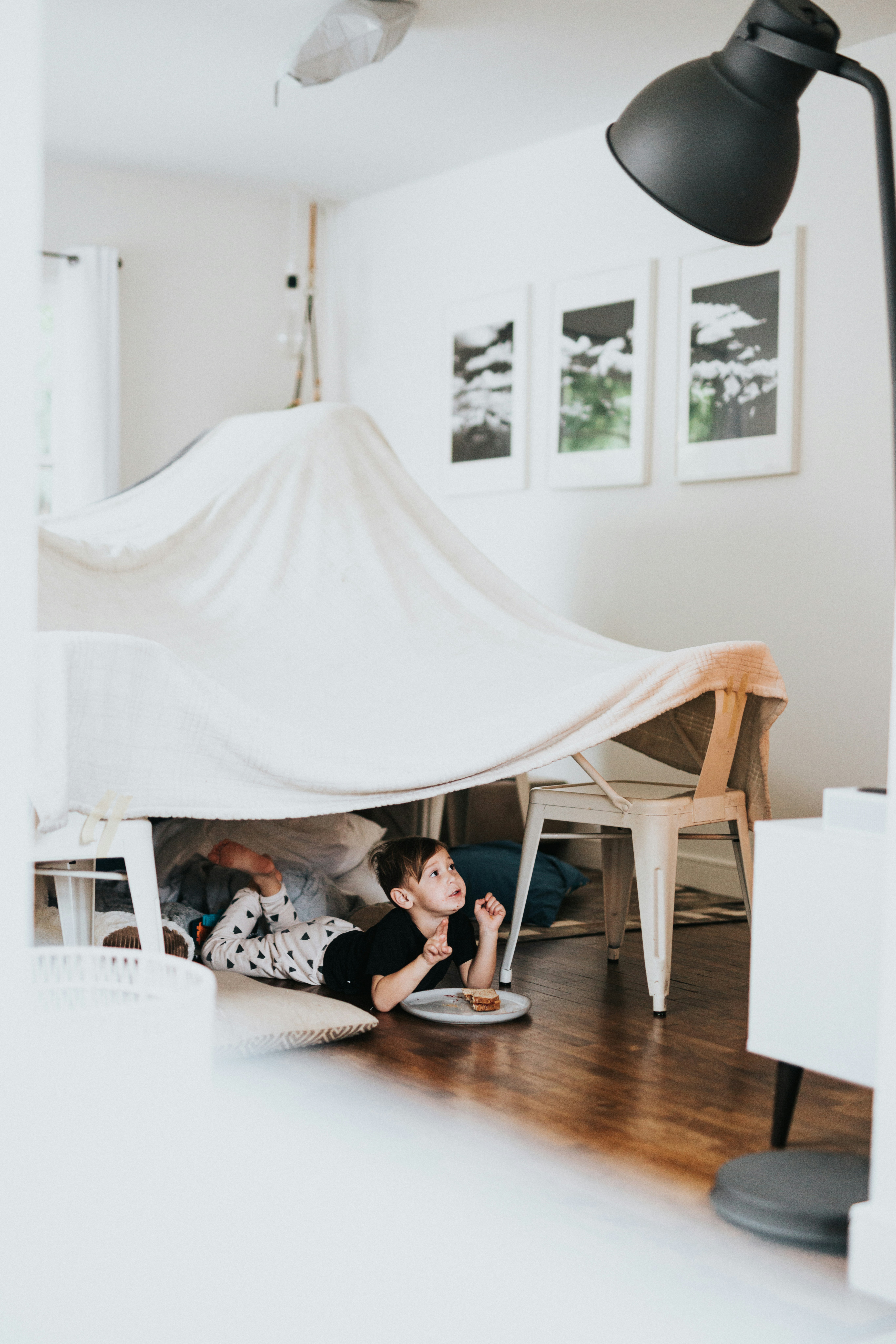
This is the art of occupying the same room without demanding anything from each other. It looks like a child building with blocks on the floor while a parent chops vegetables, or reading a book on opposite ends of the sofa in companionable silence. There are no quizzes, no direct eye contact, and no conversational pressure.
For children who are both sensorially overstimulated and emotionally depleted, this middle ground offers the best of both worlds. It provides the grounding physiological reassurance that an adult is right there, without adding any further cognitive or verbal load to an already exhausted brain.
Parallel presence offers safety without demand—the quiet comfort of being together without having to perform.
For the grown-up: holding the door without taking it personally
When a child rushes to their room or grunts in response to a friendly greeting, it can be easy to interpret it as rejection, defiance, or bad manners. Similarly, when a child follows you around the house whining while you are trying to cook dinner, it can feel overwhelming after your own busy day. Recognizing both behaviours as regulatory strategies helps remove the emotional sting.
Children rarely possess the reflective vocabulary to say, 'I have experienced substantial sensory input today and need twenty minutes in a low-stimulus environment before I can engage socially.' Instead, they slam a door, kick a skirting board, or collapse into tears over a minor frustration. Offering simple, non-judgmental choices helps build this self-awareness over time.
When you respect a genuine request for space—without punishment or guilt—you teach a child that their internal boundaries are safe. Paradoxically, the more confident a child is that their need for space will be honoured, the more easily they will seek closeness when they feel vulnerable.
From the research
Sources + further reading
- Attachment and child development — Harvard Center on the Developing Child
- Social and emotional development — American Academy of Pediatrics (HealthyChildren.org)
General information, not medical advice. If something feels unmanageable, speak to a GP or a qualified professional.
Keep reading

For parents & caregivers · Connection
What to Say When Your Child Feels Left Out
The instinct is to fix it fast. The more useful move is slower and less about solving.
For kids · Joy
Why Play Still Matters
It's not just fun and games. Play is how your brain does some of its best work.
For kids · Rest
Why Kids Sometimes Fall Apart After School
Holding it together all day takes real work. It makes sense that something has to give once you're home.
Want to make this personal?