
For parents & caregivers · Body
When Your Child Needs to Move Before They Can Settle
For some kids, stillness isn't the first step toward calm — it's the last one, after enough movement to get there.
Selfey Editorial · 6 min read
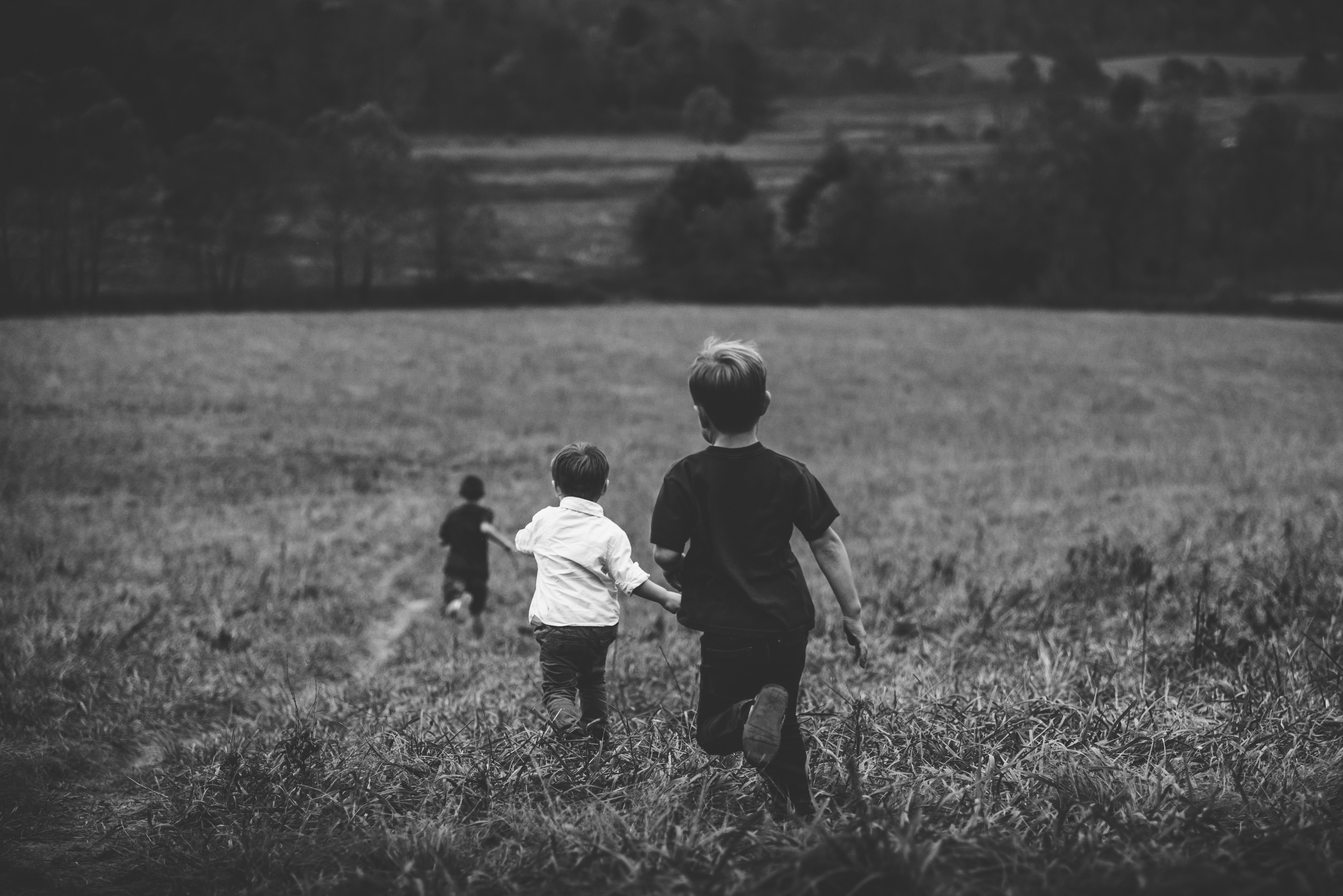
The school bag is dropped in the hallway, shoes are kicked off into a corner, and within two minutes your child is launching themselves horizontally onto the sofa, sliding down the doorframe, or doing erratic laps around the kitchen table. You have thirty minutes before dinner needs to happen and a reading log that must be signed. Your instinct, naturally enough, is to ask them to stop, take a breath, and come to the table. You ask for quiet because quiet is what the evening schedule demands, but the more you urge stillness, the more frantic their limbs seem to become.
It is easy to misread this state as wilful disorganisation or defiance. In a busy home operating under the pressure of bath times, bedtime routines, and early starts, frantic physical energy can feel like an obstacle deliberately placed in the way of calm. We tend to view stillness as the prerequisite for settling down: first you sit, then your breathing slows, then you focus or sleep. For a great many children, however, this sequence runs in precisely the opposite direction. Stillness is not the entry point to regulation; it is the final result of physical discharge.
Understanding the post-restraint surge
Children spend the vast majority of their school day engaged in what developmental specialists call sustained postural inhibition. They sit on plastic chairs at desks, line up along corridors without touching the walls, cross their legs on assembly carpets, and hold their bodies remarkably still while absorbing complex instruction. For six or seven hours, an enormous amount of mental and neurological effort goes into dampening natural motor impulses.
When a child finally crosses the threshold of home, the cognitive dampener turns off. The nervous system, having held a tightly regulated posture all day, experiences a rebound effect. The sudden burst of wrestling, floor-rolling, sofa-vaulting, or pacing is not a conscious choice to avoid their responsibilities. It is the body attempting to recalibrate its proprioceptive and vestibular systems, shaking out the accumulated physical static of a day spent under strict behavioural constraint.
When we meet this physiological surge with immediate demands for further stillness—whether that means sitting upright at a desk to complete maths problems or lying under a duvet in a darkened bedroom—we inadvertently heighten their internal pressure. The child cannot comply with the request to be still because their physical body is registering an intense state of motor backlog. Demanding that they sit down only traps that energy inside an already overloaded system.
The sensory difference between agitation and avoidance
Parents frequently wonder how to tell whether a child is genuinely in need of physical discharge or simply employing an elaborate stalling tactic to avoid an unappealing task. The distinction rarely lies in the behaviour itself, but rather in what happens immediately after the movement occurs.
Avoidance tends to be endless, negotiable, and argumentative. A child who is stalling will leap from the chair to grab a toy, then ask for a snack, then remember an urgent drawing they must finish, looking for any conversational hook to prevent the task from starting. Their attention remains fragmented, darting from one distraction to the next without any real shift in their underlying physical state.
In contrast, regulatory movement has an organising quality. When a child who needs movement is given an intense, short burst of physical input, their body visibly downshifts afterwards. Their shoulders drop, their breathing deepens, their gaze becomes steadier, and their capacity to sit and attend to a conversation or a book expands. The movement was not an evasion; it was the physiological key required to unlock their ability to settle.
The Regulation Arc for High-Movement Children
Suppression: All-day physical restraint creates motor tension
Discharge: Intentional, high-intensity movement releases backlog
Grounding: Deep proprioceptive input registers physical boundaries
Stillness: Genuine, physiological calm becomes available
The specific power of heavy work
Not all movement produces the same calming outcome. Fast, chaotic movement—such as spinning wildly, screaming while running, or watching hyper-stimulating media while jumping—can occasionally tip a child from healthy release into over-arousal. When this happens, their nervous system becomes more dysregulated rather than settled.
The most effective movement for settling is what occupational therapists describe as proprioceptive input or heavy work. Proprioception refers to the internal sense that tells our brain where our body parts are in space, mediated through receptors in our muscles and joints. When children push, pull, lift, carry, or resist weight, those receptors send strong, organising signals to the central nervous system, effectively acting as an anchor.
- Pushing against a solid wall with both hands as hard as possible for thirty seconds
- Carrying a heavy laundry basket or a stack of books to another room
- Performing animal walks across the rug, such as bear crawls or crab walks
- Crawling under heavy floor cushions or being gently squished beneath a pile of pillows
- Hanging from a pull-up bar, a garden branch, or monkey bars
Heavy work provides the brain with clear, grounded feedback about physical boundaries. It satisfies the nervous system's demand for sensation without sending the heart rate into an uncontrollable spike, making it the ideal bridge between school-day fatigue and evening quiet.
For some children, the fastest way to sit still is to move first. It isn't a detour from calm — it's the road to it.
Building movement into non-negotiable transitions
The key to making movement work in a family household is predictability. When physical activity is offered only as an emergency intervention—after a child has already started crying over their spelling words or kicking the bedframe—it often arrives too late to prevent a major rupture. By that point, the emotional frustration of the parent and the sensory overload of the child have already collided.
Instead, successful routines treat movement as an automatic, scheduled precursor to transitions. Just as you would not expect a car to drive smoothly with the handbrake engaged, you should not expect a child with high motor needs to sit at a table without clearing their postural debt first. Framing this as a normal, everyday step removes any sense of shame or punishment.
Consider establishing a five-minute movement window immediately before homework, and a separate, gentler movement sequence thirty minutes before lights out. Keep the parameters simple and time-bounded: put on a single upbeat song for a dance release after school, or set a visual timer for three minutes of wall pushes and stretches before reading together in bed. When the child knows that movement is guaranteed and welcomed, they spend far less energy fighting for it.
Adapting to low-energy evenings
There will be evenings when parents have very little patience, energy, or floor space to facilitate imaginative obstacle courses or energetic rough-and-tumble play. On difficult days, the thought of managing another lively activity can feel completely overwhelming. It is important to remember that heavy work does not require athletic equipment or active parental performance.
Simple, passive resistance can accomplish much of the same neurological grounding. Asking a child to help you move dining chairs, carry shopping bags into the kitchen, or push a loaded washing basket down the hall integrates necessary motor input directly into basic household management. The goal is never perfection or elaborate play; it is simply providing their joints and muscles with the deep sensory input they require to finally release their held tension.
From the research
Sources + further reading
- Physical activity guidelines for children and young people — NHS
- WHO Guidelines on Physical Activity and Sedentary Behaviour — World Health Organization
General information, not medical advice. If something feels unmanageable, speak to a GP or a qualified professional.
Keep reading

For parents & caregivers · Body
Quiet Isn't Calming for Every Child
Some children settle in silence. Others need noise, movement, pressure, or rhythm to find calm at all.

For parents & caregivers · Body
Getting Kids Moving Without Turning It Into a Programme
You don't need a class, a schedule or the right equipment. You need permission to let it be messy, unstructured, and short.

For kids · Body
Why Your Body Can Feel Done After School
Not sick. Not lazy. Just properly, fully used up — and that makes sense.
Want to make this personal?